 CloudTAK for Colorado BSAR


A world class dispatch system for Colorado BSAR
Supporting CPW ESF 9 function with a common operating picture
Every backcountry search and rescue (BSAR) mission in Colorado is the responsibility of a county sheriff and is executed, overwhelmingly, by unpaid volunteers. While this model has produced one of the most capable volunteer rescue communities in the country, it has also created a coordination problem: fifty-plus independent teams, each with their own mapping, tracking, and communication tools, and little to no interoperability between them.
Mutual aid makes this problem concrete. As soon as a call goes out to resources outside the Agency Having Jurisdiction (AHJ), intelligence and resource management are primarily handled via phone calls and chat systems, leaving no structured record of relevant data. Whether an incident is a multi-day operation requiring additional ground searchers or an aviation request for a hoist-capable helicopter, coordinators lack a single, shared operating picture to track and manage resources before, during, and after a request.
Both 911 Public Safety Answering Points (PSAPs) and wildland fire dispatch centers have long recognized that a common operating picture is the foundation of effective resource allocation. A shared platform allows coordinators to pull geospatial data, track resources, and combine multiple disparate systems and data sources into a single view of incidents across the state.
The Division of Fire Prevention and Control (DFPC) Center of Excellence for Advanced Technology Aerial Firefighting (CoE) already operates the Colorado Team Awareness Kit (COTAK), a statewide, real-time location service available at no charge to every Colorado public safety agency. Furthermore, the CoE has built CloudTAK, an open-source, browser-based common operating picture designed for modern incident management. CloudTAK already fulfills the need for a unified view by seamlessly aggregating data from multiple sources—pulling everything from CAD, to SAR-specific operational plans from CalTopo, to traditional GIS data from local and state governments.
This paper will argue that Colorado does not need to procure a statewide BSAR coordination platform. It already owns one!
High Level Recommendations
- Adopt CloudTAK as the State BSAR Dispatch System CloudTAK is an existing operational system with a growing number of direct integrations into dispatch systems. As these integrations expand, the COTAK program will continue moving toward providing a comprehensive, statewide view of all incidents and resources.
- Adopt COTAK as a centralized identity provider (IdP) Access to digital tools should be frictionless for responders. A single identity provider means one username and password for every tool. COTAK already provides this service to Colorado public safety agencies and can be used to manage access to CloudTAK, Slack, or any modern application through a single, secure login.
- Adopt a Live-Chat and Live-Voice Application for Real-Time Intel Sharing Effective deconfliction requires seamless communication. COTAK has performed market research regarding a shared chat platform for Colorado Public Safety and is in active pricing negotiations with vendors. The Center of Excellence recommends adopting a single, unified chat platform for statewide coordination.
Why now
Colorado's backcountry search and rescue system is in the middle of the largest structural change it has seen in five decades.
-
2022 · Senate Bill 22-168
The funding moves to CPW
SB22-168 transferred control of the Colorado Search and Rescue Fund from the Department of Local Affairs to Colorado Parks and Wildlife, and created the Backcountry Search and Rescue Council to advise on fiscal allocation
CPW now administers the BSAR Fund, reimburses counties and teams for unexpected mission costs, and runs an annual grant process for equipment, training, and explicitly - software.
-
2022 · Senate Bill 22-206
Marshall Fire mandate launches COTAK
Following the Marshall Fire the CoE received a one-time legislative appropriation and a statutory mandate via SB 22-206 to "Develop and implement a Colorado Team Awareness Kit for interested public safety agencies in the state."
The COTAK system as it exists today first came online in October 2022, with the website coming live in February 2023.
-
2022-2025 · Grant distribution
$7.9M flowing to local SAR
CPW distributed $7.9 million in BSAR grants to county sheriffs' offices over this period, funded in part by a $1.25 backcountry search and rescue surcharge on hunting and fishing licenses and OHV, snowmobile, and boating registrations, plus the CORSAR card.
This money has dramatically increased teams ability to purchase equipment, vehicles, and training
-
2024 · Permanent funding
Dedicated funding to sustain COTAK
To sustain the COTAK program the CoE pursued a decision item during the 23-24 legislative session. This decision item was approved by CDPS and the Governor's Office, and was adopted unanimously by the Joint Budget Committee of the legislature.
This funding came available July 1, 2024 and facilitated the hiring of 6 additional staff to build and maintain COTAK, as well as to operate and further develop the system.
-
2026 · State Coordination
Statewide coordination is changing hands
At the request the County Sheriff's of Colorado (CSOC), CPW has begun to implement statewide oversight of Backcountry Search and Rescue (BSAR) coordination via an Interagency Agreement (IAA) delegating DHSEM's ESF 9 authority. State level management of the program will ensure consistency, oversight, and accountability across the program
A transition to state oversight is a critical moment for the program and a unique opportunity to implement a shared operating picture for the first time.
Institutional memory and proprietary tools not owned by the State do not survive contract transition. A state owned process and technology stack does.
The ability of the State of Colorado to own and operate the processes and applications future proofs the long term success of the program. The state must ensure continuity and processes will survive personnel, external contractor, or organization changes. A proprietary system and processes are a risk to the ability to ensure the citizens of Colorado have reliable and uninterrupted access to BSAR services.
Six gaps between
the 911 call and the rescue
None are failures of coordinators, they are consequences of the same missing layer: a shared picture above the county level.
No statewide picture of active calls
Every county tracks its own missions its own way. There is no board a state coordinator can look at to see every open call for service in Colorado, its status, and who is handling it.
Interoperable CAD from the PSAP
The dispatch center that took the call holds the CAD event, the call notes, and often a transcription - the richest record of the incident there will ever be. Coordination above the county level often starts by reading it over the phone instead of inheriting it.
Unified access to digital tools
Access to existing tools - CalTopo, Slack, ArcGIS Online is often managed ad-hoc by individual teams and coordinators. All SAR members should be able to access the tools they need without having to manage multiple accounts. A single identity provider is the most effective way to manage access.
Federal Data Sharing
Like state coordinators, the Air Force Rescue Coordination Center (AFRCC) controllers at the federal level must collect background information about an incident. CloudTAK's deep integration framework will allow incidents to be shared in real-time with AFRCC controllers and for federal coordinators to share data with state coordinators and local operations staff.
Aircraft Deconfliction
Deconfliction for manned aircraft at the state coordinator level has proven to be a highly effective method of ensuring situational awareness and safety of public safety aircraft. However increased use of UAS from both the public and SAR teams themselves have created a deconfliction gap - aircraft will deconfliction not just with other public safety aircraft, but also with UAS.
Standard Resource Request Flows
Provide standard flows for tracking resource requests and approvals. This will allow for a more efficient and effective process for requesting and approving resources and also give centralized data to track statistics and trends in resource requests and approvals.
What CloudTAK is
Based on the mature SOCOM developed Team Awareness Kit, CloudTAK is a browser native, TAK compatible common operating picture built and maintained by the DFPC Center of Excellence.
Browser-native
CloudTAK works on every browser and every device from desktop to an MDT
TAK-interoperable
Built on the Team Awareness Kit, TAK is deployed in almost every state and widely across the federal government.
Open source
Published under AGPL-3.0, CloudTAK is maintained in the open and any agency can use it and improve it.
Widely Used
CloudTAK is used daily by SAR teams, the Federal Wildland Fire service, and many state and local agencies across the country.
Life of a call for service
From call to completion.
In our imagined scenario, the journey starts when the roommate of two climbers who had planned to climb a popular route in the Weminuche Wilderness, calls 911 to report that the climbers have not returned home as planned.
-
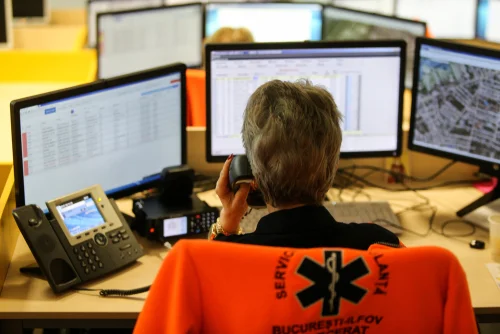
Fig. 3 The Public Safety Answering Point (PSAP) takes a 911 call The call arrives
In the ideal case, the event & associated initial call notes originate at the PSAP. The dispatch center receives a call from Liam, the roommate of the missing climbers, who reports that they had been planning on climbing Wham Ridge in the Weminuche Wilderness, but have not returned home on sunday as planned. The dispatcher creates an event and assigns a deputy from the local sheriff's office. The deputy interviews the roommate and adds the details to the event, entering additional details into the CAD system before paging out the local Backcountry Search and Rescue team.
-
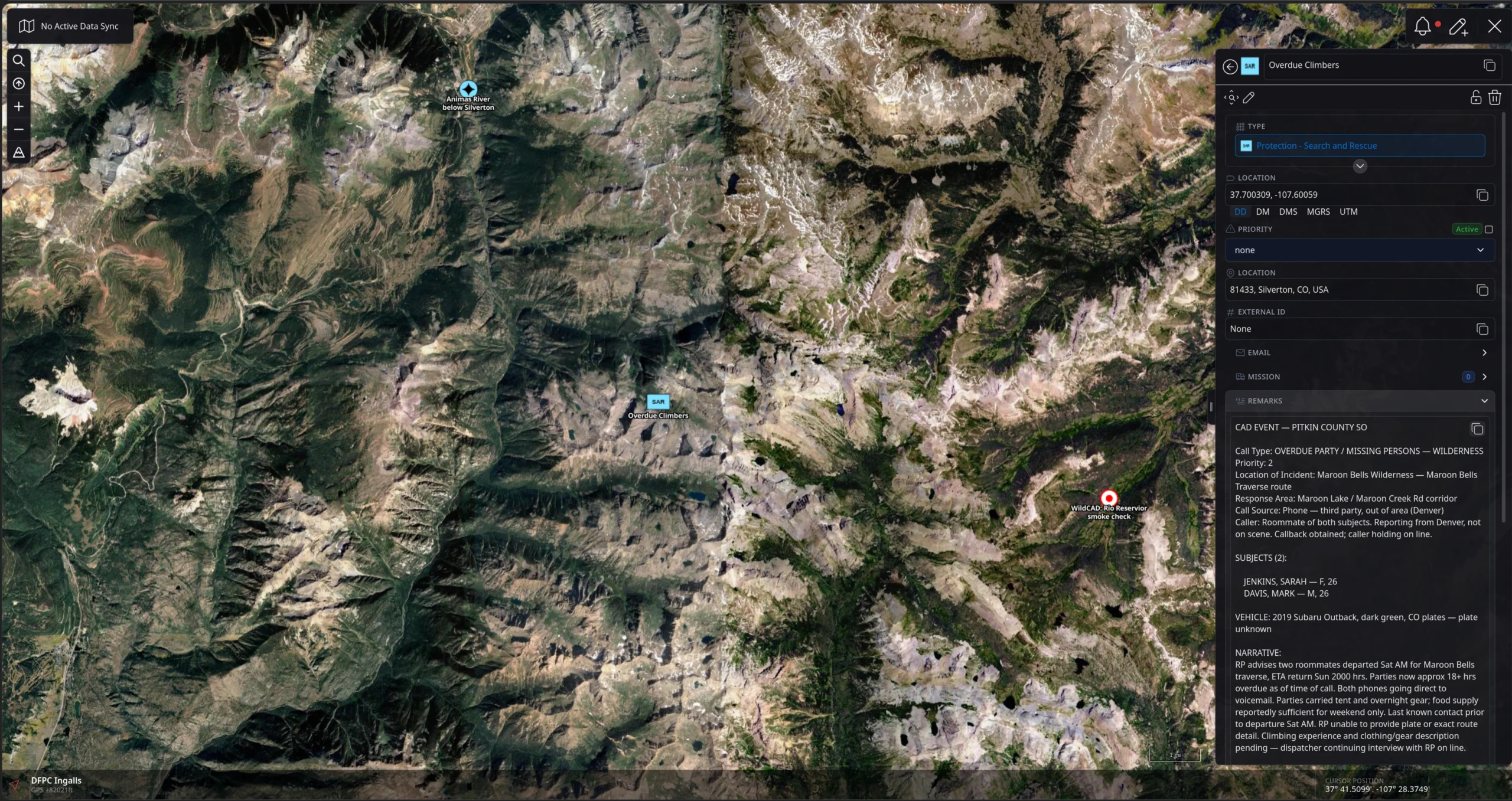
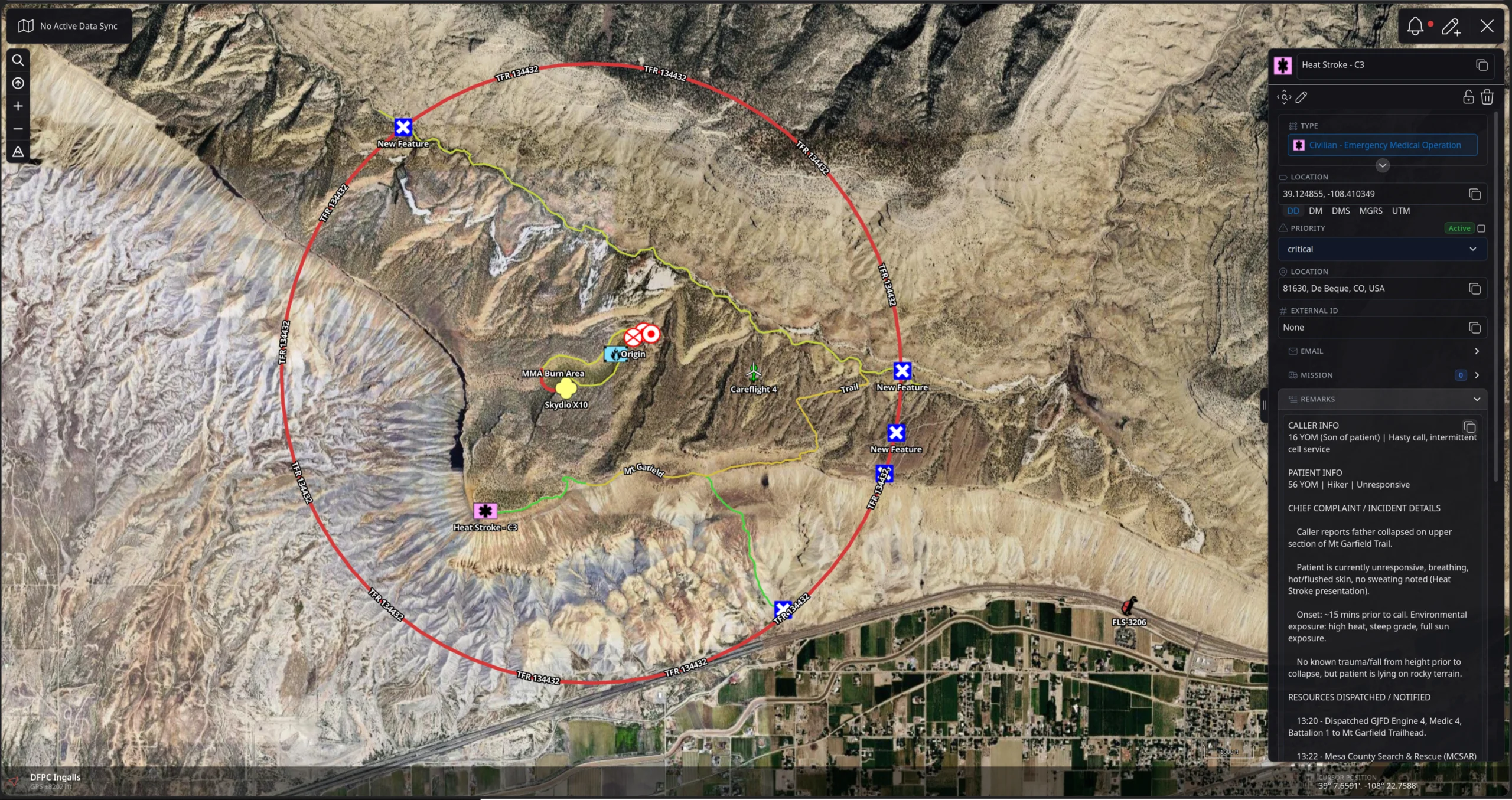
Fig. 4 The call becomes an event: the Overdue Climbers call rendered at its location on the shared map, carrying the dispatcher's full CAD narrative in its remarks CAD <=> COTAK
The CAD system is integrated into COTAK and as the event is created, it is synchronised in real-time into COTAK and available to local resources. Progressive counties could also push all SAR events to a State Channel, allowing state coordinators to see all SAR events even before resources might be requested. The SAR team receives the page and then copies the event into a SARTopo map which they use to plan their local response.
-
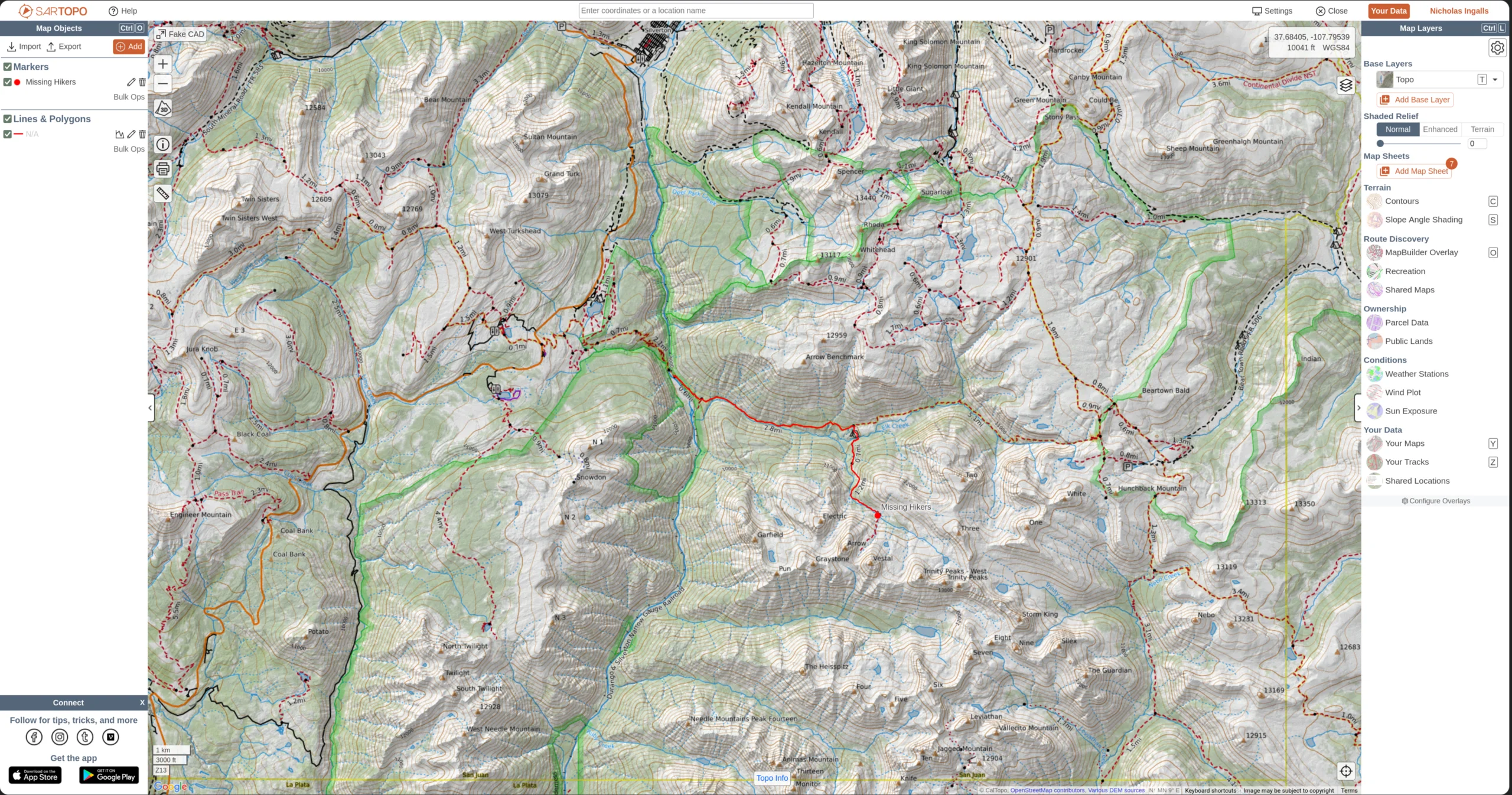
Fig. 5 Due to weather the team dispatches an initial ground team Local Response
The local SAR team dispatches local resources to begin the arduous climb to Vestal Basin, the popular camping area below the route. In the meantime, the deputy interviewing the RP is able to get a Garmin InReach page from the RP which confirms the location of the climbers as being in the vicinity of wham ridge. Weather on the horizon threatens to make ground access difficult in the coming hours.
-
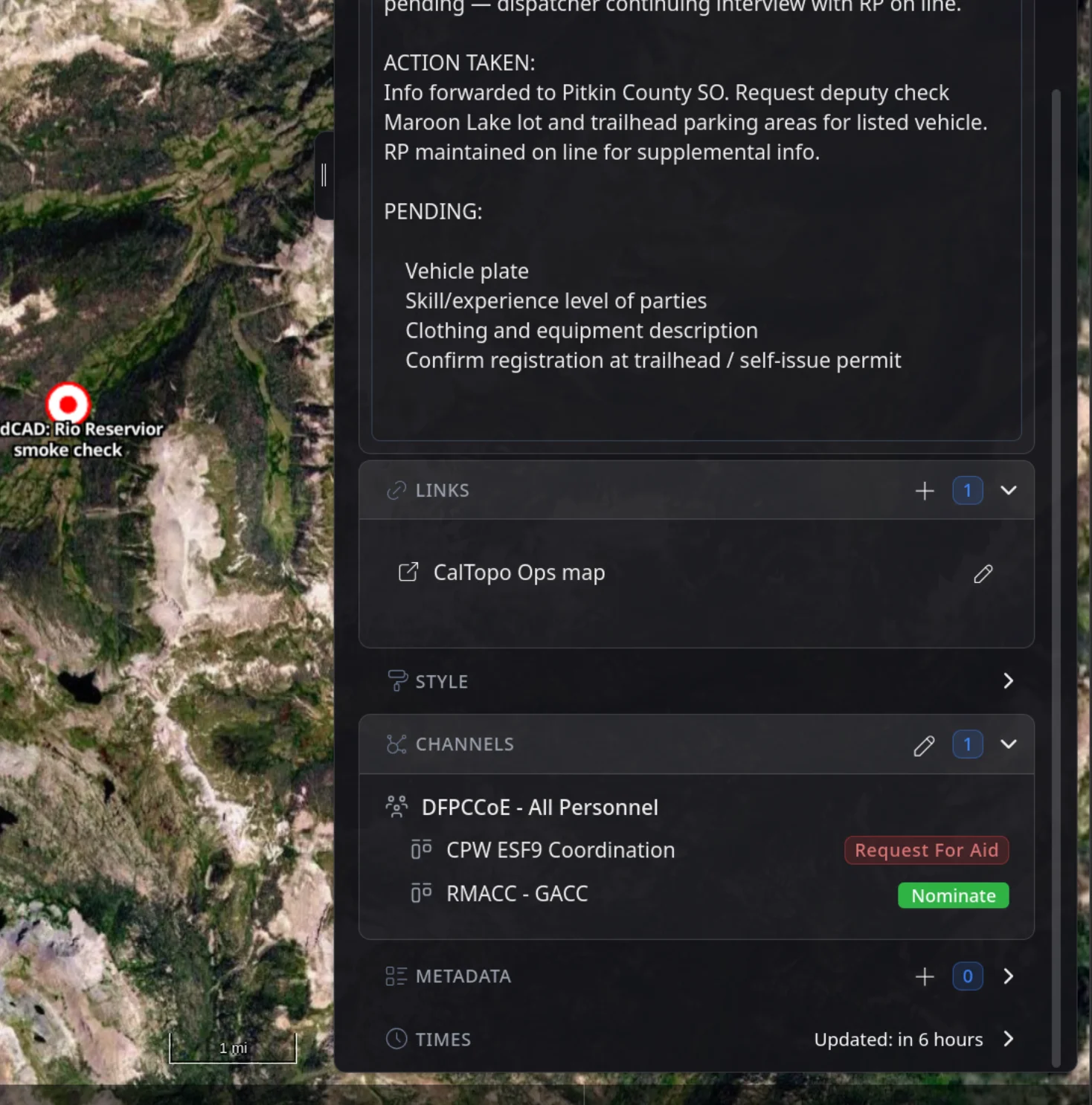
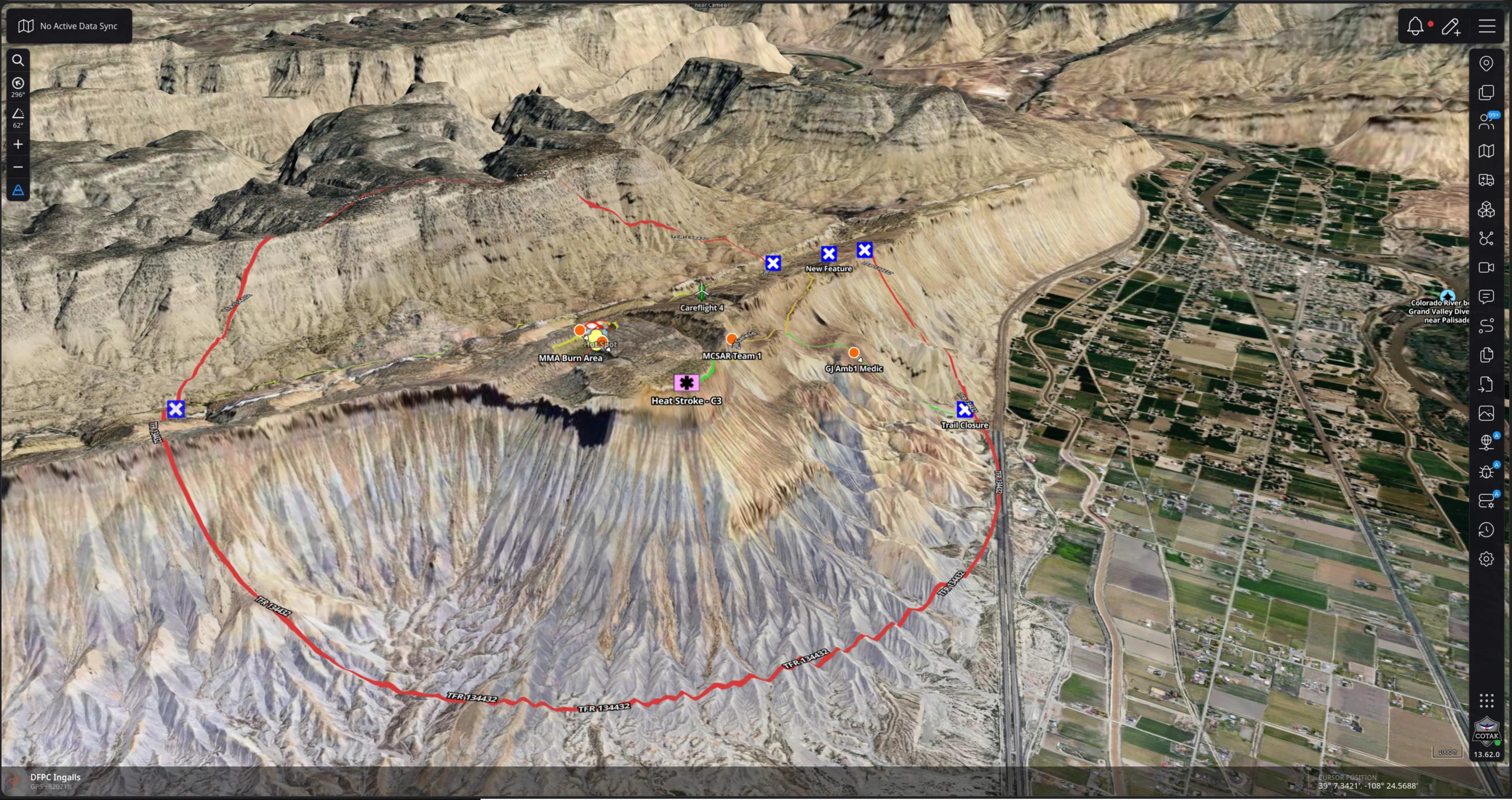
Fig. 6 Live positions render on the shared map through the active mission; at closeout the card moves to Completed, leaving the full record of the call Local Ops Staff Call for Resources
Operations Staff augment the call details with additional context and link to the SAR Topo map and nominate the call to the state event board, notifying state coordinators that a request for additional resources is imminent. They include links to their CalTopo map and additional context to allow coordinators rapid understanding of the situation and the ability to make informed decisions about resource requests.
While full integration leads to the most rapid and complete understanding of the situation, all steps of the process are optional for local teams - state coordinators can perform the same steps via a simple call. In the future they will be able to include additional details like contact information for deputies and operational staff in a structured format.
-
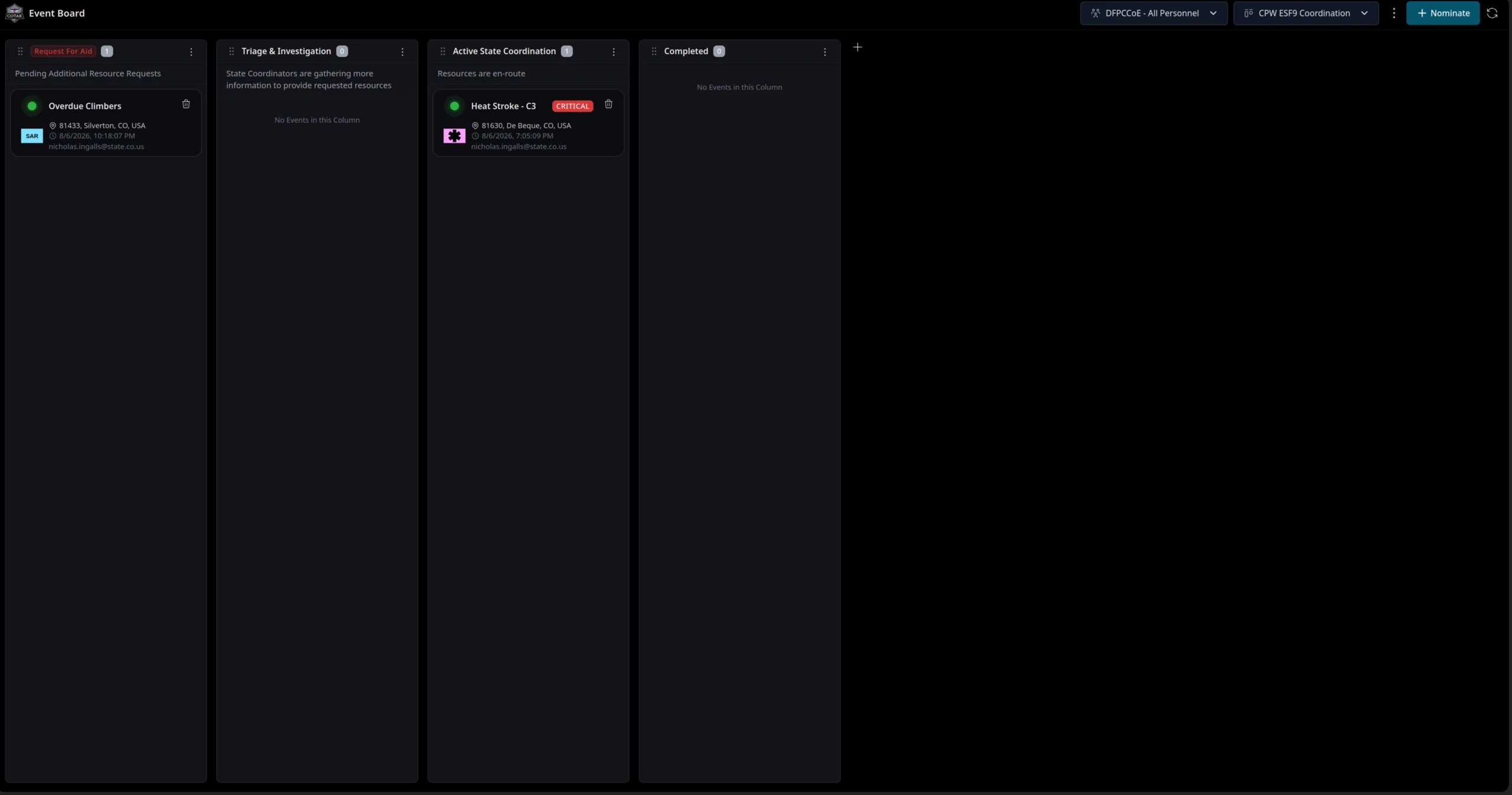
Fig. 6 State Coordinators see the card on their board and review the call details in anticipation of a resource request. State Coordinators Review
State Coordinators review the call and the attached links to the SAR Topo map and other context. They are able to see the call notes and understand the situation before a resource request is made.
Their policy is to wait 10 minutes for an incoming call from ops staff before calling the contact provided with the card for details. If a local agency did not have a CAD integration, the state coordinator would instead create a new card entry on their board after receiving a call. COTAK use in an agency is not a requirement for dispatch, but it does allow for a more rapid and complete understanding of the situation.
When the call is nominated to the board, a Slack channel is automatically created and state coordinators notified and invited to the channel. This allows for rapid communication and coordination between state coordinators and local ops staff.
-
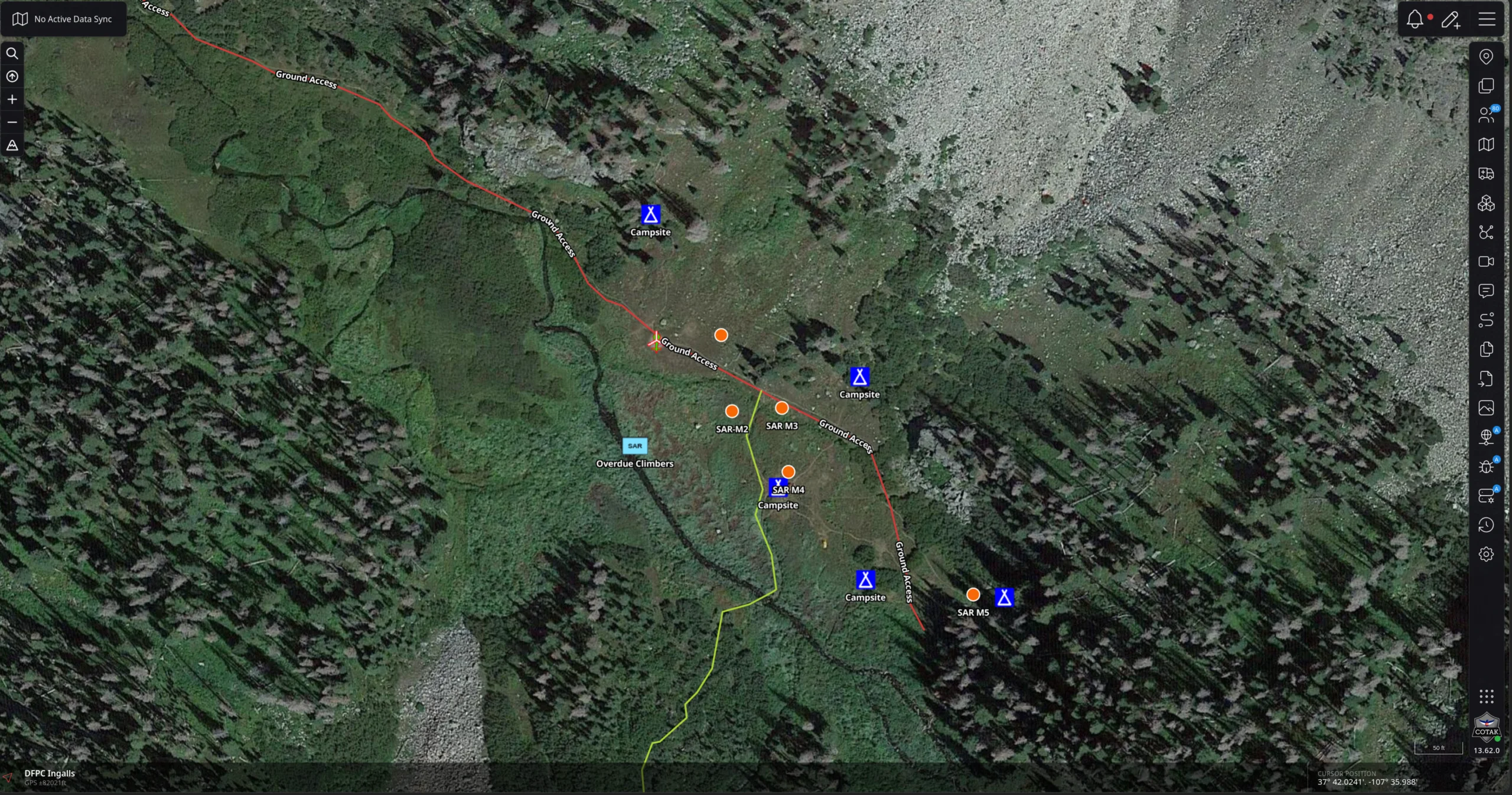
Fig. 6 State Coordinators get a request for resources from local operations Request for Aviation
Due to rapidly deteriorating weather, the ops team requests a helicopter to ferry ground teams to Vestal Basin to begin a search. The state coordinators work to facilitate the request for the DFPC Firehawk which has considerable carrying capacity. They also notifying AFRCC to put the National Guard on standby in case there is a need for a hoist.
As resources are requested, Slack access automatically given to resource POCs to aid in situational awareness and planning. Additional information is gathered by coordinators from local operations and the Event Card is pushed to the AFRCC Board, giving AFRCC & federal SAR coordinators the exact same call information and Slack access as state and local responders.
-
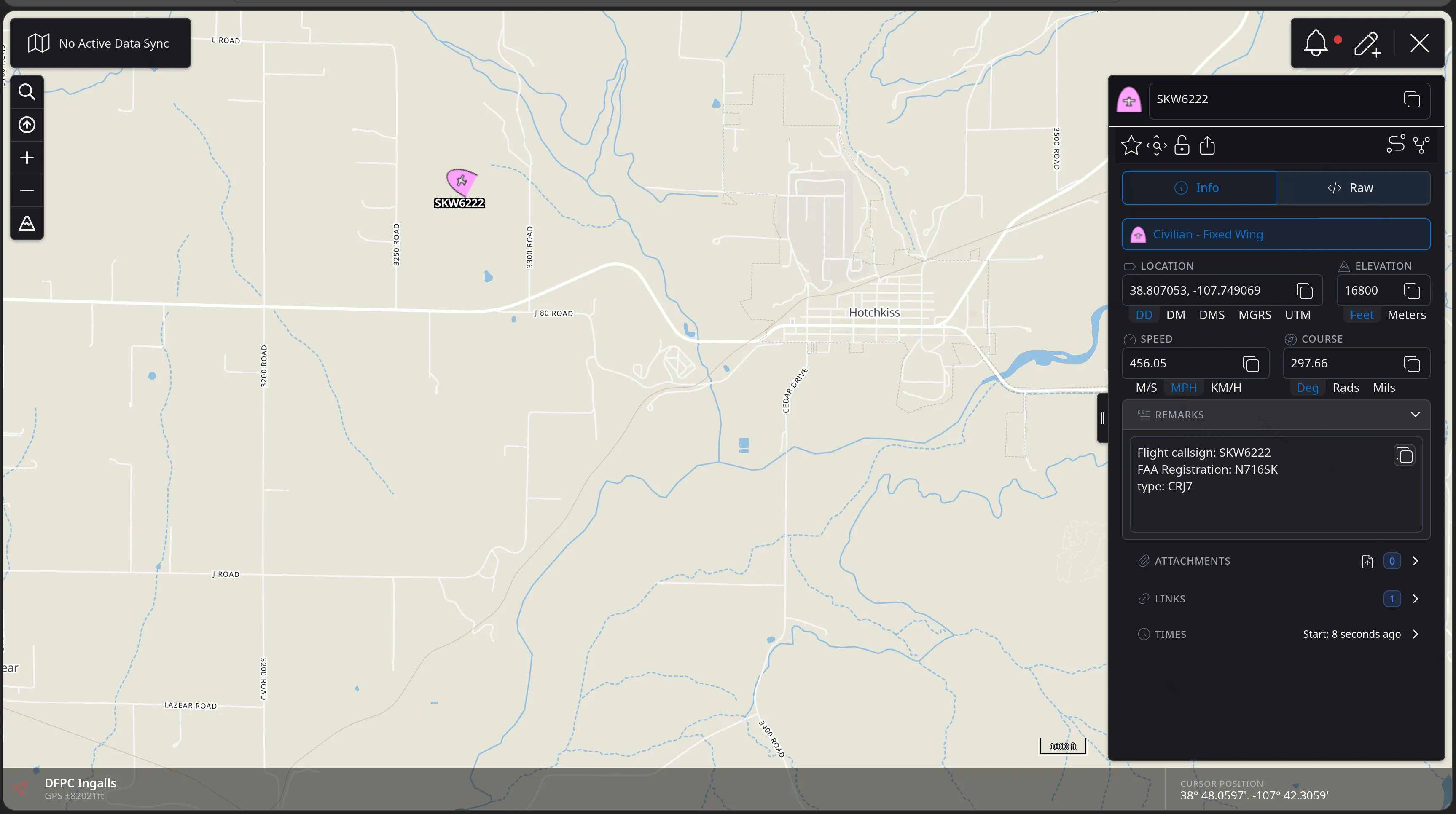
Fig. 7 COTAK combines ADSB with RemoteID Live Deconfliction
CloudTAK combines deconfliction data from both a state managed ADSB receiver network and real-time CUAS systems to provide a more complete picture of airspace, bringing in data from a wide variety of commercial sources.
-
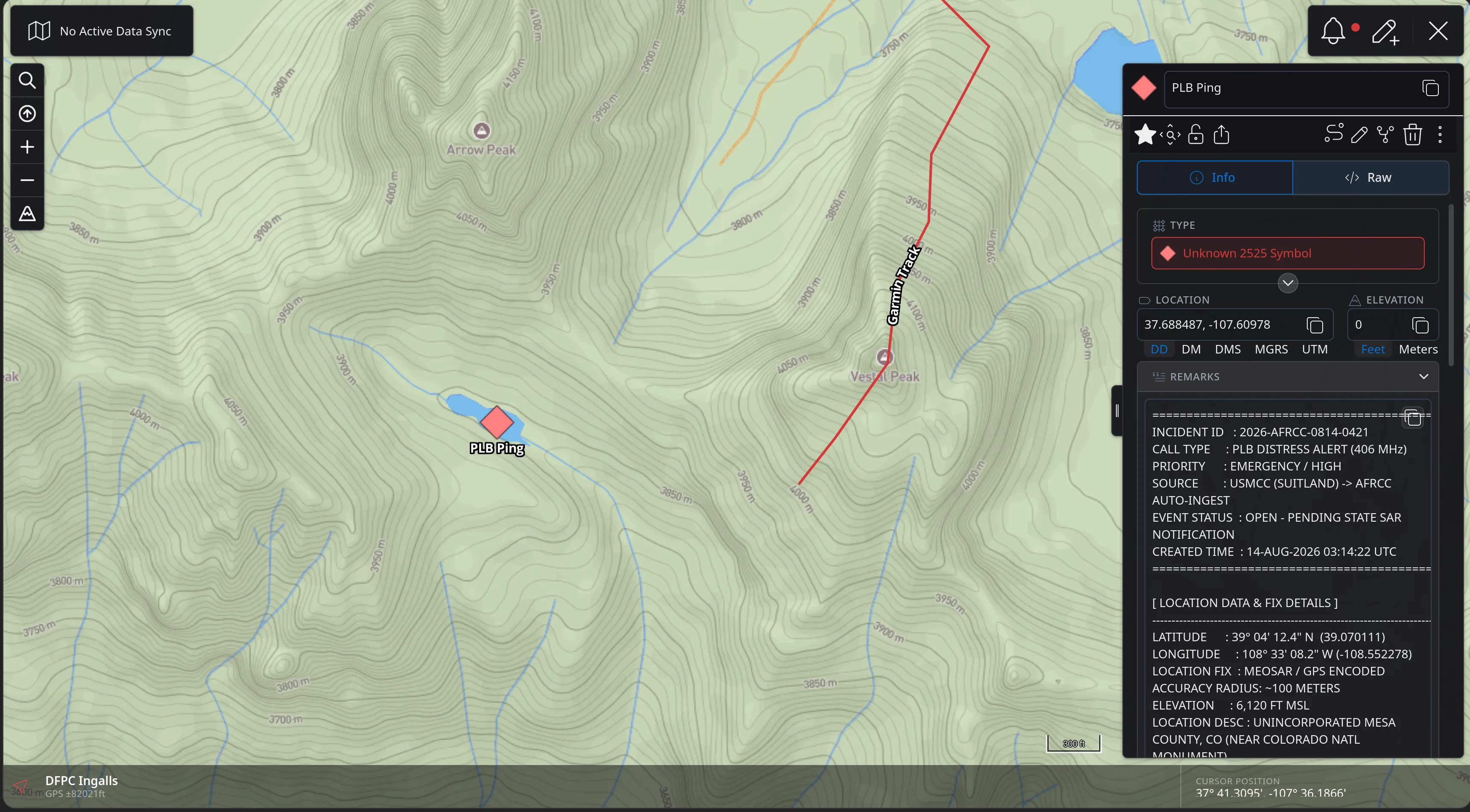
Fig. 8 Data Sharing at All Echelons of Command PLB Activation
While aviation and ground team assets make access to Vestal Basin, CloudTAK synchronization allows AFRCC dispatchers to immediately push down a PLB activation which occurs during the response to the responders map. With the combination of local agencies, federal and state resources, and dispatchers sharing data, the climbers are found to have moderate injuries which made them unable to self-extricate and are hoisted and transported to definitive care. The event is closed and a full record of the call is available for after action review and records keeping
When the escalating team is on COTAK, the state coordinator answers the phone with the card already on the board.
A nomination is a call for service
Nominating a map event to the state coordinators board pushes call information in anticipation of a resource request. While data can be kept isolated in a local channel, teams can also proactively push all SAR events to the MAC channel, pre-populating a statewide picture of all active calls for service.
Columns are yours to define
The board mirrors a CAD-style dispatch view, and its columns are customizable in the board - Nominated could as easily read "Request for resources." Calls can be displayed in a Kanban style column view or a CAD style list view.
Every channel can run boards
This paper describes the flow in the context of the Colorado Mutual Aid channel, but boards are not a state-only feature: every agency and every channel in the system can stand up one or more event boards and organize them in their own way.
Current BSAR Roadmap
Mapped against the life of a call: intake, standup, resourcing, the active mission, and closeout.
| BSAR requirement | CloudTAK capability | Component | Status |
|---|---|---|---|
| CAD ingestion | CAD data federated directly from the PSAP | ETL System |
Operational |
| AFRCC Dispatch Integration | Sync all state coordination data with the AFRCC | CloudTAK + Slack |
Active Development |
| Paging | Integrate with paging systems like Active911 when CAD data is not available | ETL System |
Operational |
| Out-of-Band Event Creation | Events created directly in CloudTAK when the call does not originate in an integrated 911 system - including by a state coordinator answering the phone. | CloudTAK |
Operational |
| Shared Event Board | Per-channel boards with flexibility in process | CloudTAK Event Board |
Operational |
| Nomination workflow | A call for service nominated to the state board for coordinator awareness - by the local team, or by a coordinator acting on a phone call from the agency having jurisdiction. | CloudTAK event board |
Operational |
| Escalation to mutual aid | An agency-level incident hoisted to the Colorado Mutual Aid channel in one action, sharing the event and all related data with authorized state resources. | TAK channels | Fielded |
| Incident links | External tooling like Slack Channels and SARTopo linked directly from the event | CloudTAK |
Operational |
| Slack Incident Automation | Event creation triggering Slack channel creation and invites | CloudTAK + Slack |
Active Development |
| Coordinator assignment | Assigning an individual or individuals to an event, showing who is in charge at each level of the response. | CloudTAK events |
Active Development |
| Resource Catalog | Integration into an existing resource system like WebEOC | WebEOC integration | Proposed |
| Shared mission data | Data Sync (TAK Missions) can sync with external GIS systems and also sync data with federal SAR resources | CloudTAK Data Sync |
Operational |
| CalTopo synchronization | Sync CalTopo map IDs into a Data Sync Mission | etl-caltopo |
Beta Testing |
| Aircraft & UAS Deconfliction | Pull in aircraft and UAS locations both from state owned ADSB receivers and integration into UAS platforms | etl-adsb etl-skydio etl-brink |
Available |
| Outbound Dissemination | CloudTAK is not a silo, push data into external systems | etl-arcgis, etl-kinesis |
Available |
How it fits together
Below is a high level overview of the architecture of the CloudTAK system and how it integrates with existing systems and processes.
The most important property of this architecture is that every step of this process is optimal for those below the state operations level. A county that does not have a CAD integration can still nominate calls to the board from CloudTAK or simply call the dispatch phone number and have the call entered by a state coordinator. Likewise those that find real-time chat useful can communicate with frictionless access to Slack but can just as easily call coordinator via the dispatch number and convey the same information. The system is designed to be flexible and adaptable to the needs of each agency.
The second important property is that the data flows both directions. CloudTAK is not designed to be a silo. While it pulls in as much data to create a true common operating picture, it also disseminates that picture back to 3rd party systems. CloudTAK can push data back to CalTopo, to the AFRCC, to ForeFlight and more. This allows for a true common operating picture across all systems and agencies.
No Procurement Needed
COTAK is fully funded and provides 24/7 engineering and operations support.
What already exists, at no cost
COTAK is already in operational use in a wide number of Colorado counties. It already integrates with CAD systems, paging systems, and other state and federal SAR resources. It is already maintained and supported by the DFPC Center of Excellence, and it is already available to all Colorado public safety agencies at no cost. The state has already made the investment in the platform, and it is already being used across Fire, EMS, Law Enforcement, and SAR.
CPW Funding
CPW can focus on funding SAR specific technology such as Slack and SARTopo. COTAK will integrate any new tools into the common operating picture, and help to ensure that SAR responders can access the tools they need with a single login.
No team has to give anything up
Teams standardized on CalTopo keep using CalTopo; teams on TAK keep using TAK. CloudTAK adds a shared layer above whatever a team already runs. Adoption that requires volunteers to abandon familiar tools mid-season will fail, and the model here does not require it.
The question is not whether to buy a platform. It is whether to utilize the one the state already owns.
Who owns the data,
and who answers for it
State-owned, open source
CloudTAK is published under AGPL-3.0 ensuring that it will be free and open forever. With it's permissive license, any agency can audit the code or stand up its own instance for free but are required to share improvements back to the State.
Identity and access
Authentication is backed by directory services with x509 certificate-based connections, passkey support, and per-user session and token management. Channel membership governs who sees which data.
Data Residency
The platform runs in a secure cloud, only accessible by US Citizens on US soil. Data is retained via a retention policy that is consistent with state records retention requirements.
Joint Governance
While the Center of Excellence builds and operates COTAK, we are a customer driven organisation and are committed to listening to the needs of our users and stakeholders to ensure that the platform meets the needs of the BSAR community.
Continuity
Because the platform is state-operated and the source is public, a change in the statewide coordination contractor does not put the operating picture, its history, or its integrations at risk.
Sources
- Backcountry Search and Rescue Program. Colorado Parks and Wildlife. cpw.state.co.us/backcountry-search-and-rescue-program
- Backcountry Search and Rescue Council. Colorado Parks and Wildlife. cpw.state.co.us/committees/backcountry-search-and-rescue-council
- Colorado Parks and Wildlife receives two bids for statewide search and rescue management. The Colorado Sun, June 4, 2026. coloradosun.com
- Who Pays for Backcountry Search and Rescue in Colorado? Colorado Search and Rescue Association. coloradosar.org
- COTAK - Colorado Team Awareness Kit. DFPC Center of Excellence. cotak.gov
- CloudTAK Documentation. DFPC Center of Excellence. docs.cloudtak.io
- CloudTAK and integration source repositories. GitHub,
dfpc-coeorganization. github.com/dfpc-coe - Center of Excellence for Advanced Technology Aerial Firefighting. Colorado Division of Fire Prevention & Control. cofiretech.gov
Terms
| Term | Definition |
|---|---|
| BSAR | Backcountry search and rescue. In Colorado, a sheriff's statutory responsibility, executed primarily by volunteer teams. |
| AHJ | Agency Having Jurisdiction. The agency with legal authority over an incident - for Colorado BSAR, ultimately the county sheriff. |
| PSAP | Public Safety Answering Point. The 911 dispatch center that receives, records, and transcribes the call for service. |
| CAD | Computer-aided dispatch. The dispatch center's incident management system, and the data object CloudTAK ingests as the base of a response. |
| MAC channel | Mutual aid coordination channel. The statewide Colorado Mutual Aid channel to which agency-level incidents are escalated for state visibility and resourcing. |
| Core event | The CloudTAK record of a call for service - created from CAD data or by hand - that the board, links, resources, and history all attach to. |
| Event board | A per-channel board of core events with customizable columns (e.g. Nominated, Pending Investigation, Active, Completed) tracking the mission lifecycle. |
| Nomination | Placing a core event on a board as a call for service - visible for situational awareness without anything necessarily being asked of the viewer. |
| AFRCC | Air Force Rescue Coordination Center. The federal coordination center for inland search and rescue, a target for outbound data sharing. |
| WebEOC | A widely deployed emergency management information system, the proposed home for the external resource catalog and request workflows. |
| TAK | Team Awareness Kit. A family of situational-awareness applications and the server that connects them, in wide use across US public safety. |
| CoT | Cursor-on-Target. The lightweight message format TAK systems use to exchange positions, features, and events. |
| COTAK | Colorado Team Awareness Kit. The statewide TAK service operated by the DFPC Center of Excellence, available at no cost to Colorado public safety agencies. |
| CloudTAK | The browser-based TAK client and integration platform built by the Center of Excellence and the subject of this paper. |
| Channel | A TAK Server access-control group. Determines which users and integrations can see a given stream of data. |
| Data Sync / Mission | A shared, server-hosted dataset that synchronizes to every subscribed device, including devices that reconnect after being out of coverage. |
| ETL | Extract, transform, load. In CloudTAK, a containerized task that converts an external data source into map data. |
| CORSAR | Colorado Outdoor Recreation Search and Rescue card. A voluntary purchase contributing to the state's search and rescue fund. |